




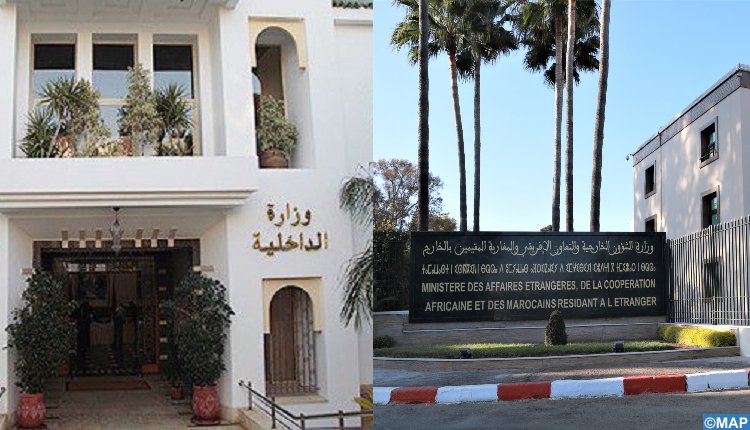
When the Ministry of Interior Redraws the Boundaries of Local Democracy in Morocco
In the quiet corridors of institutions and the growing unease of local councils, the 2025 report of Morocco’s Ministry of Interior emerges as a wake-up call.
More than 300 elected officials face judicial proceedings, and dozens have already been dismissed or removed from office.
These are not mere statistics — they are fragments of a larger story: the enduring tension between responsibility and power, between electoral legitimacy and the rule of law.
Numbers That Speak — But Not Loud Enough
The Ministry reports 302 legal cases involving presidents of communes, vice-presidents, members, and former officials.
Behind these numbers lie stories of conflicts of interest, misuse of authority, and blurred lines between public service and personal gain.
The key question arises: how does electoral trust, born from the people’s will, sometimes mutate into a tool of self-interest? Is this a matter of individual corruption, or a reflection of structural weaknesses in Morocco’s local governance?
Between Prosecution and Dismissal: Law as Compass or Constraint?
The report reveals 216 dismissal requests, leading to the dissolution of eight local councils and the revocation of 63 members.
It is the law asserting itself — yet it also mirrors a society questioning the credibility of its democratic institutions.
Should this wave of enforcement be read as a sign of democratic maturity, or as a tightening of centralized control under the guise of ethical reform?
The Interior Ministry as Moral Arbiter
Beyond judicial measures, the Ministry is building a new legal culture: dozens of consultations on conflicts of interest, political defection, loss of eligibility, and public ethics.
The message is clear — being elected means being accountable, not untouchable.
But another question lingers: can an administrative authority serve as a guardian of democratic ethics without compromising local autonomy?
Local Power Between Empowerment and Oversight
This moment can be read in two directions:
-
For some, it embodies the long-awaited accountability of power.
-
For others, it signals the re-centralization of authority, a subtle reassertion of control over local decision-making.
Either way, the image is the same: fragmented councils, uneasy leaders, and citizens torn between applause and suspicion.
Civil Society Awakens
Behind every legal case, there are citizens, activists, and local associations defending transparency and public trust.
This marks the rise of a new civic consciousness, where democracy does not end at the ballot box — it begins there.
Yet the question remains: will this awakening endure without a deeper structural reform of local governance?
Unanswered Questions
-
Are these actions the beginning of a new era of institutional integrity?
-
Or just another cyclical purge in an evolving democracy?
-
Can Morocco reconcile legal accountability with genuine local autonomy?
Conclusion
What unfolds today goes beyond legality — it is about redrawing the moral and political map of governance.
The State declares: no one is above the law.
Society answers: the law must serve everyone equally.
Between these two affirmations lies the real test of Morocco’s democratic maturity — a test that will measure not only obedience to law, but the restoration of public trust, moral leadership, and the meaning of accountability itself.