




The partnership between the European Union and Morocco in the field of migration has evolved into one of the most pragmatic and strategically sensitive cooperation models in the Mediterranean region. What began as an arrangement focused on border control and mobility has gradually turned into a multilayered political, economic, and security relationship — one in which financial incentives, geopolitical calculations, and social realities intertwine.
Financial Mechanisms and Political Objectives
Since 2018, the EU has injected hundreds of millions of euros into Morocco through instruments such as the EU Emergency Trust Fund for Africa and the Neighbourhood, Development and International Cooperation Instrument (NDICI). Officially, this funding is intended to “strengthen border management capacities” and “support the socio-economic integration of migrants.” Yet behind the language of cooperation lies a clear political intent: to externalize Europe’s borders by turning Morocco into a buffer zone that intercepts migratory flows before they reach Spanish or Italian shores.
This “outsourcing of migration management” has been described by several analysts as Europe’s strategy to maintain internal political stability by keeping migration crises away from domestic public opinion. In return, Morocco leverages this cooperation to obtain economic support and diplomatic recognition, particularly on strategic issues such as the Moroccan Sahara.
Morocco’s Role as a Strategic Gatekeeper
Over the past decade, Morocco has consolidated its role as both a partner and a gatekeeper. The Kingdom’s control over migratory routes in the western Mediterranean has given it significant leverage in its dealings with Brussels and Madrid. Periodic tensions — such as the 2021 Ceuta incident, when thousands of migrants crossed into Spanish territory — revealed how migration can also serve as a tool of diplomatic pressure, whether implicitly or explicitly.
Nevertheless, Morocco has maintained a dual discourse: on one hand, asserting its commitment to humanitarian and development-based approaches; on the other, emphasizing the shared responsibility of origin, transit, and destination countries. This delicate balance reflects Morocco’s ambition to be perceived not as a subcontractor, but as an equal regional actor capable of shaping migration governance in Africa and the Mediterranean.
The Development Paradox
The EU’s financial contributions often come under the banner of “addressing the root causes of irregular migration” through employment, education, and local development programs. However, the results remain limited. Many of these projects are short-term, overly bureaucratic, or fail to reach the communities most affected by migration pressures.
Moreover, critics argue that the focus on security and control has overshadowed deeper socio-economic dimensions. By prioritizing the containment of migration rather than fostering sustainable development, the EU risks reinforcing the very dynamics that drive migration in the first place.
The Human Dimension: Between Control and Dignity
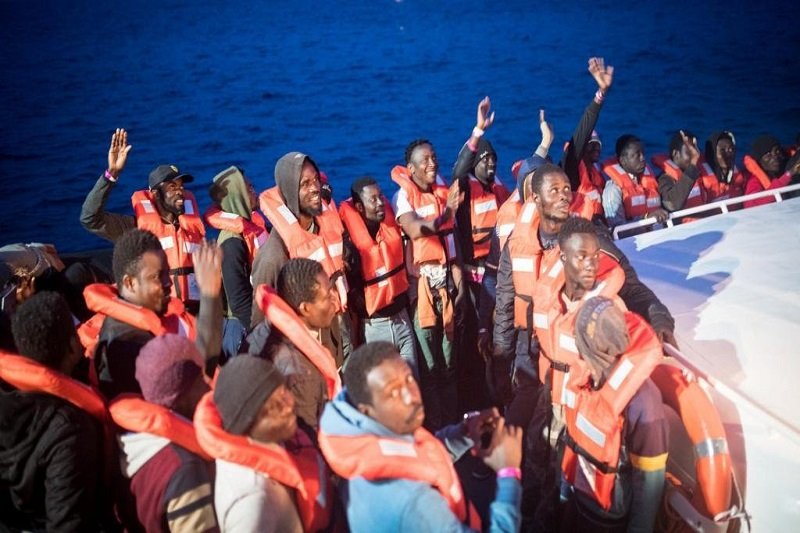
On the ground, the effects of these policies are tangible. Migrants from Sub-Saharan Africa often find themselves stranded in Moroccan cities such as Nador, Oujda, and Casablanca, facing legal uncertainty, social exclusion, and sporadic violence. Civil society organizations have repeatedly called for greater transparency and accountability in how EU funds are used, insisting that migration should be approached through a human rights and solidarity framework rather than through mere containment.
Moroccan authorities, for their part, highlight efforts to regularize thousands of migrants and promote integration through access to health, education, and employment. Yet the gap between political declarations and daily realities remains wide — a reminder that migration management cannot succeed without addressing dignity as a fundamental component of policy.
Beyond the Border: A Question of Shared Responsibility
As Europe grapples with internal divisions over asylum reform and rising populism, Morocco’s role becomes even more pivotal. But the sustainability of this partnership depends on a paradigm shift: from transactional cooperation to genuine co-development. The central question is no longer how to stop migration, but how to make mobility a lever for shared prosperity between the two shores.
This calls for long-term investments in education, green economy, and youth employment in