




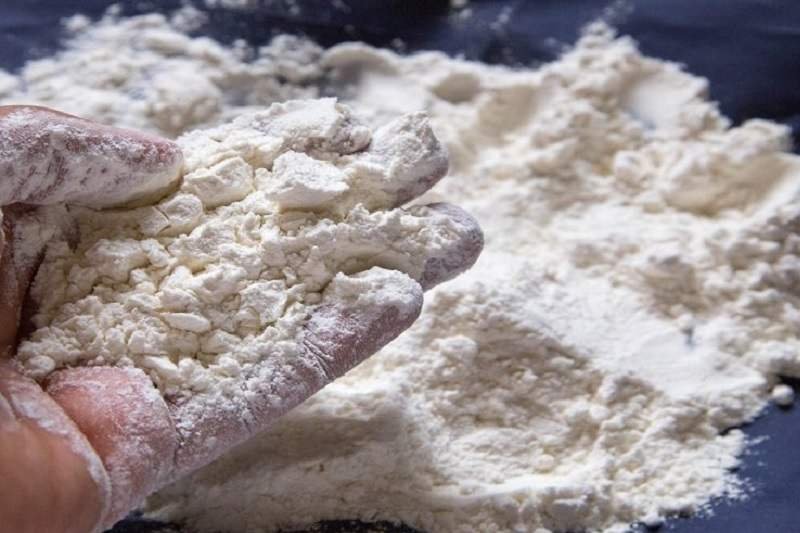
Sixteen billion dirhams blown away in the mills of public subsidy… A political bomb exploded inside Morocco’s Parliament when Ahmed Touizi, head of the Authenticity and Modernity Party group, revealed that the so-called “national subsidized flour” might, in some cases, be nothing more than paper flour.
الخبز الذي نأكله… ليس كما نعتقد: فساد يلتهم 16 مليار درهم من دعم الدقيق! pic.twitter.com/DjFSOW31wZ
— المغرب الآن Maghreb Alan (@maghrebalaan) October 29, 2025
Behind this shocking claim lies a broken subsidy system — one that has lost its social mission and turned into a playground for rent-seeking and corruption.
With over 16.8 billion dirhams spent and oversight nearly absent, the burning question remains: who is truly consuming the subsidy money, and who grinds the truth before the grain?
This is no longer about tainted flour — it is about a state mechanism that feeds the machinery of corruption more than it feeds social justice.
When Bread Becomes Paper: The “Flour Scandal” That Shakes Morocco’s Trust in Itself
In what was meant to be a legislative debate, Moroccan MP Ahmed Touizi from the Authenticity and Modernity Party detonated a political bomb in Parliament.
He accused certain companies of “grinding paper and selling it as subsidized flour meant for the poor.”
It was not a verbal slip, but a statement that reopened an old wound in Morocco’s social body — the wound of trust.
When people begin to doubt the food on their tables, it means confidence in institutions, in oversight, and in the State as the guardian of dignity — before mere subsistence — has begun to crumble.
Between those who see Touizi’s words as a belated alarm over a decaying subsidy system, and those who read them as populist rhetoric seeking to ride the wave of social anger, one question lingers:
Can Moroccans still trust the flour they eat, when they no longer know where it comes from, what it contains, or who controls it?
From Subsidized Flour to Crushed Support
For years, the subsidized flour system has been one of the most opaque chapters in Morocco’s social policy.
The supposed beneficiaries complain about poor quality, lack of transparency, and favoritism in distribution, while certain companies continue to enjoy public funds without real accountability.
Touizi’s recent revelations merely tore open a long-sealed truth.
Both the Moroccan Consumer Protection Observatory and the Moroccan Center for Human Rights have called for an official investigation, arguing that this affair transcends food safety — it strikes at the very heart of social justice.
In Morocco, bread is more than food — it is a symbol of dignity.
And when that symbol is tainted, it is not the dough that collapses, but the collective trust that binds a society together.
Between Justice and Politics: Who Holds the Truth?
The National Federation of Mills was quick to react, vehemently denying the accusations.
But the denial alone did little to erase the deep-seated suspicion rooted in the Moroccan collective memory — a memory shaped by repeated scandals of food fraud and corruption in public subsidy management.
Hence, the call for a judicial investigation emerged as a moral necessity.
The Consumer Observatory urged the Public Prosecutor to hear Touizi and demand evidence to substantiate his claims, noting that such serious allegations cannot hang in the air without verification.
And if these accusations prove baseless, another question arises:
What is the moral cost of turning the poor man’s bread into a tool of political theatre?
Between Dough and Dysfunction
The scandal extends far beyond hygiene — it exposes a structural failure in Morocco’s welfare model.
For decades, the State has relied on intermediaries to manage social aid, leaving the true beneficiaries marginalized and opening wide the door to abuse and misappropriation of public funds.
Human rights activist Abdelilah Khoudri calls for a radical reform: to shift from in-kind subsidies to direct cash transfers through the Unified Social Registry, ensuring that support reaches the families who need it most — not the “parasitic companies” growing rich in the name of poverty.
One question remains:
Is this truly support for the poor — or the impoverishment of support itself?
Morocco spends billions in the name of solidarity, yet solidarity remains a slogan rather than a lived reality.
Crisis of Flour or Crisis of the State?
Ultimately, this issue is not about flour alone — nor about one MP’s rhetoric — but about a deeper crisis of governance and transparency.
When oversight becomes a slogan and accountability a rarity, citizens become the last to know what they are consuming.
Who controls what in the flour subsidy system?
Why does the management of social support remain cloaked in secrecy?
And how can a State aspiring to a “New Development Model” hope to build the future without first restoring trust in the bread of today?
Perhaps Touizi exaggerated — or perhaps not.
But his words have at least stripped away a painful truth:
beneath the hum of the mills and the dust of politics, it is social justice itself that is being ground, day after day, in the machinery of bureaucracy.