





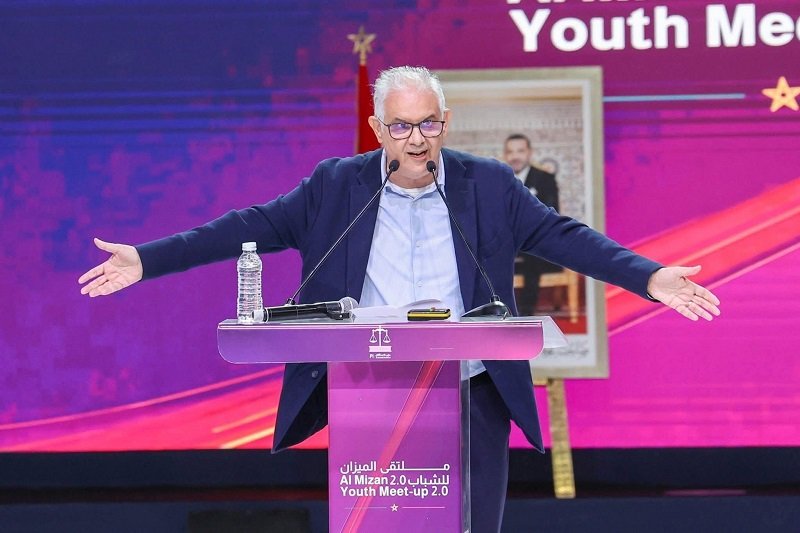
In a time when politics and morality intertwine, and the line between rhetoric and practice blurs, Nizar Baraka — Secretary General of the Istiqlal Party and Minister of Equipment and Water — delivered an unusual speech in the Moroccan political landscape. At the Al-Mizan Youth Forum 2.0, in front of over 1,500 young people from across the Kingdom, he denounced “corruption that has worsened” and “the culture of cronyism, opportunism, and favoritism” that erodes national values and undermines citizens’ trust in their country.
At first glance, the speech seems sincere in its diagnosis. But a crucial question arises: how can a party that is part of the government, holding ministers and strategic portfolios, speak of corruption it has failed to combat from within the institutions of power itself?
Since the current coalition government took office, of which the Istiqlal Party is a central pillar, no tangible transformations have been observed in fighting corruption or embedding social justice and transparency. Worse, the trust gap between citizens and the state has widened, giving the impression that the reformist discourse remains largely rhetorical.
When Baraka speaks of a “crisis of values,” he touches a deep social wound, yet at the same time highlights a paradox in Moroccan politics: when a government official becomes a moral preacher instead of a concrete actor of reform, words alone are no longer enough.
Calling for the revival of Islamic values cannot conceal the weakness of oversight and accountability institutions, which the parties themselves help shape.
Notably, Baraka evoked the concept of “Al-Fath Al-Mubin” — the “clear victory” — referring to the Quranic verse cited by King Mohammed VI. But are we truly witnessing a new opening in Moroccan political consciousness, or a symbolic opening aimed at reviving the historical luster of the party after it lost its way in the pragmatics of governmental alliances?
His speech points to a crisis that goes beyond politics into society: erosion of values, decline of public-spiritedness, rise of opportunism as a measure of success, and the transformation of “cronyism” into a way of life rather than an isolated behavior. Yet, can this structural value shift be changed by words alone? Or is a deep institutional reform needed to restore meritocracy and accountability, rather than favoritism and partisan loyalty?
The realistic analysis forces a more uncomfortable question: does the Istiqlal Party, as a member of the executive, have the courage to implement what it preaches? Or does its moral discourse remain symbolic, polishing its image within a government that has yet to convince citizens of its ability to enact real change?
What Baraka says is important, even necessary. But it will gain real depth and impact only if it turns into a language of action, moving from calls to reassess values to concrete policies that restore citizens’ trust and demonstrate that moral reform cannot be separated from political reform.
Ultimately, Baraka’s speech is not just a rhetorical moment, but a mirror of collective political anxiety, caught between acute awareness of declining values and a persistent inability to translate ethics into policy.
The question remains open for the entire political class: can we truly fight the “culture of cronyism” while remaining prisoners of the “culture of self-justification”?