





Laftit and the Merit of What Was Lost: Toward Accountability in Local and Territorial Affairs
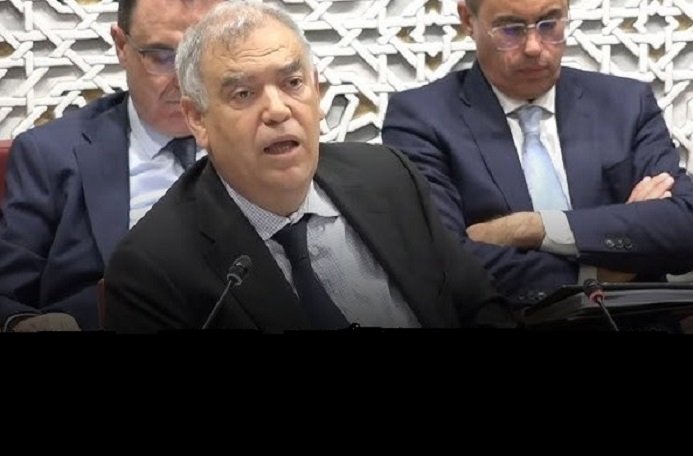
The statements made by the Minister of the Interior, Abdelouafi Laftit, directed at elected officials and those who have seized communal lands, mark a pivotal moment in the relationship between the State and local territorial governance.
When he said: “Anyone who took money or land must return it… otherwise we will pursue them to the end,” he was not addressing a single individual, but an entire system of informal networks that has persisted for decades within territorial administration.
But what does this discourse mean in practice? Are there clear indications that the State is preparing to dig into what might be described as “half a century” of practices? And what are the limits of this excavation?
1. The Facts and Leaks Behind the Statement
Reports from various media sources reveal that cases involving the transfer of communal lands and unlawful practices within territorial councils are no longer merely local or isolated, but institutional in nature.
Examples:
-
Investigations have been launched in several communes in regions such as Casablanca–Settat and Fès–Meknès, regarding communal lands transferred at artificially low values for real estate development, with the involvement of commune presidents or aligned council members.
-
Leaks from regional courts of financial and administrative inspection showed the existence of “suspicious channels” within local councils used to allocate subsidies and public financial support through fictitious associations or personal delegations — indicating that corruption is not limited to land but also to public funds.
Specific Case:
-
In the commune of Mghogha (Tangier), the vice-president is currently under investigation for forged documents involving communal forest lands that were transformed into private ownership.
Official Warning:
-
The Ministry issued a directive regulating construction on communal lands — a clear acknowledgment of the legislative and executive loopholes that had been exploited for years.
These elements form the contextual foundation of the Minister’s statement. It is not simply a warning message — it is a response to accumulated structural phenomena.
2. What Is Meant by “Half a Century of Corruption”?
The ministerial discourse suggests that the issue at hand is not new, but the result of decades of accumulated practices.
Does this imply that the State intends to conduct a full historical audit spanning from post-independence until today?
Indicators:
-
The sale and transfer of collective or customary lands — long denounced by civil society — date back to many years. For example, the issue of “Soulaliyah” lands had already been addressed by the relevant ministry in 2021.
-
The new directive regulating construction on communal lands reflects an effort to restore legal foundations that had been neglected or weakly enforced for decades.
Thus, the temporal scope of the issue likely spans several decades.
However:
There has been no official declaration that the investigation will cover all activity since 1956 or systematically revisit every historical contract.
Therefore, the shift underway should not be understood as a full historical purge, but rather as a focus on:
-
What can be recovered today.
-
What has legal basis for enforcement.
-
What is currently traceable through documentation and registry systems.
3. What Does the State Aim to Achieve? And What Are the Limits?
Based on the information available, the State aims to:
-
Recover communal assets improperly transferred or privatized.
-
Reform administrative and legal procedures, including:
-
Circulars and regulatory updates
-
Registry corrections
-
Closing legal loopholes
-
Reclassifying and re-registering lands
-
Revising delegation and transfer procedures.
-
-
Hold elected officials, administrators, and intermediaries accountable, including judicial referrals. Approximately 30 cases have already been submitted to public prosecutors.
However, limits remain:
-
Some cases are still in early investigation stages.
-
Certain transfers may involve complex legal entanglements requiring years of litigation.
-
Revisiting early post-independence transfers requires archival retrieval and political will, making a comprehensive rollback unlikely in the immediate term.
4. What Changed in Governance — and Why Now?
Why is the State speaking in this tone now?
Key reasons:
-
Growing social pressure: public complaints about land and local corruption are now more visible, especially among youth and civic movements.
-
Development imperatives: expanding cities, rising land values, and large-scale urban projects mean land is now an economic priority.
-
Restoring legitimacy: local corruption erodes trust in elections, councils, and public institutions — threatening the foundations of local democratic governance.
-
Technological and regulatory modernization: the adoption of GIS systems, updated land registries, and the new construction directive signal the State’s move toward serious enforcement.
5. Open Questions for Monitoring and Debate
-
Will action extend to high-level power figures, or focus mainly on lower-tier officials?
-
How far can the State go in revisiting old contracts and recovering assets transferred decades ago?
-
What guarantees will ensure actual restitution, rather than negotiated settlement or reallocation under new intermediaries?
-
How will the rights of ordinary citizens affected by illegal land operations be protected?
-
Will this shift modify the real balance of power in local governance and improve public services?
6. What Should Citizens Expect?
For citizens, the process must translate into:
-
Tangible outcomes: recovered lands, restored resources, revived development projects.
-
Transparency: open tenders, public documentation of transfers, accessible records.
-
Sustainable accountability: not just a temporary campaign, but an institutional monitoring framework.
7. Why This Issue Matters Nationally
This is not just about land or financial loss.
It is about principle:
-
The community must not be plundered from within.
-
The elected official must serve — not dominate.
-
Public wealth is not a prize, but a trust.
At a national level, this effort seeks to rebuild the relationship between citizens and institutions, bridging the gap between development discourse and lived local reality.
Conclusion — Between Speech and Reality: A Major Test
Laftit’s remarks carry weight — but they are merely a beginning.
History will judge not the announcement, but the execution and the clarity of results.
If the legal follow-through is transparent, exceptions refused, and citizens allowed to monitor outcomes, this could mark a true shift in communal governance and the recovery of public resources.
But if the effort remains selective or politically managed, it will be remembered only as another unfinished speech.
Final question:
In the coming years, will we witness land cases dating back fifty years brought before the courts — forcing restitution or settlement?
Or will the matter remain within the realm of “ongoing investigations”?
Organized Table of Publicly Reported Cases Involving Communal or Collective Lands in Morocco
| # | Region / Location | Subject | Publication Date | Link | Key Notes |
|---|---|---|---|---|---|
| 1 | Aït Hammou Commune – Rehamna | Transfer of Soulaliyah lands (“Rkibat”) | Feb 2025 | Anfaspress | ~8 hectares, nominal lease contract |
| 2 | Multiple regions (national) | Communal land appropriation returns to public debate | Nov 2025 | Aljarida 24 | Analytical coverage – territories unspecified |
| 3 | Casablanca Commune | Contested transfer of communal assets | Feb 2025 | Assahra Al-Maghribia | Active debate in communal council |
| 4 | Kénitra & Tetouan Regions | Investigations into commune presidents for suspicious land transfers | Jul 2024 | Sabah Agadir | Six commune presidents implicated |
| 5 | Ouatat El Haj Circle – Boulemane | Soulaliyah lands as ground for corruption and bribery | Nov 2024 | Intelligencia | Tens of thousands of hectares involved |
| 6 | Multiple regions – Communal Property | Large-scale investigation by General Inspectorate of Territorial Administration | Jul 2025 | Al-Khaleej Al-Arabi | Joint committees and central oversight involved |