



Budget and Government Crisis: An Analytical Reading of MP Mohamed Ouzine’s Intervention
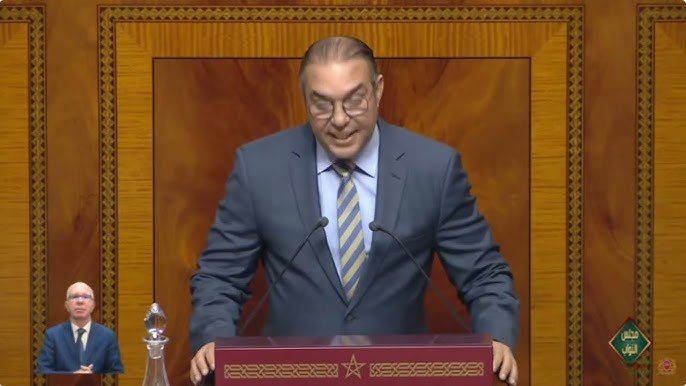
In a heated parliamentary session, Mohamed Ouzine, MP from the Popular Movement, broke the monotony of budget debates by presenting a sharp and critical analysis of the 2026 Finance Bill. He asserted that the current government has left no positive impact on Moroccan citizens’ lives over the past four years.
Ouzine opened by illustrating the everyday reality of Moroccans, highlighting the gap between governmental announcements and citizens’ lived experiences: applause in parliamentary chambers does not translate to real satisfaction among the public.
He emphasized the ineffectiveness of past budgets, stating that funds allocated to essential sectors produced no tangible results. He denounced the ongoing deterioration of the middle class and the incapacity of social mechanisms to protect citizens from inflation and rising costs of goods and services.
Another key critique focused on regional disparities in investment and budget allocations, exposing a stark divide between urban Morocco and rural or mountainous regions, consolidating the “two-speed Morocco” model. Millions remain outside social protection, while the government claims success based on financial indicators disconnected from reality.
Ouzine posed critical questions on governmental effectiveness:
-
How can citizens believe the Finance Bill will meaningfully improve their lives amid declining services and persistent corruption?
-
Why is citizens’ purchasing power being drained through direct and indirect taxes while productive sectors see no returns for their efforts?
-
What is the real value of public institutions that are heavily subsidized but contribute minimally to state finances?
Regarding education and healthcare, Ouzine highlighted planning failures, citing the government’s backtracking on contract worker regularization, tuition fee caps, and medical specialization management, which exacerbate social disparities and public frustration. He described this as a crisis of thought and governance, emphasizing that numbers alone cannot improve quality of life.
He described the 2026 budget as a “last-minute budget”, reacting to social pressures rather than a coherent economic vision. According to him, the government attempts to restore legitimacy with money after failing to build it through public policies.
Economically, Ouzine warned against draining citizens’ purchasing power instead of investing in production and real wealth creation, noting that official growth figures remain numbers without tangible impact.
He also raised concerns about transparency and accountability: why do many public institutions remain a burden on the state? Why don’t allocated credits translate into tangible achievements for citizens? Ouzine argues that the government’s crisis is not financial but of governance and planning, and public patience has its limits.
Finally, Ouzine stressed the government’s failure to implement the social state, noting that substantial funds allocated to vital sectors have neither improved service quality nor generated jobs. He insisted that real change requires revising priorities and strengthening public policy effectiveness, ensuring social justice and reducing disparities.
Analytical questions for follow-up:
-
Can this budget generate tangible results before the elections, or is it merely a media tool?
-
What is the real role of public institutions that contribute little to state finances, and will they continue to be funded without accountability?
-
How can social and regional disparities be reduced in a “two-speed Morocco”?
-
Will continued corruption and declining service quality lead to a loss of public trust before the government’s mandate ends?
-
What are the real alternatives to financial depletion policies, and how can the government invest in production and real wealth?