




An announced reform, committees with no names, public funds distributed quietly, and independent journalists working without protection… Who has the courage to open the files instead of simply polishing the surface?
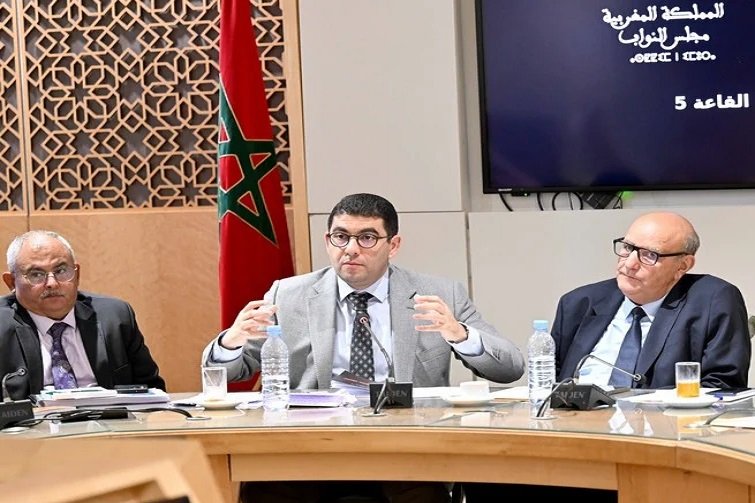
The issue of public media has returned to the Moroccan Parliament, following the announcement by the Minister of Youth, Culture and Communication, Mohamed Mehdi Bensaid, of a new study being conducted by the Ministry of Economy and Finance to reassess the financial situation of public broadcasting channels, as part of the ongoing effort to restructure the sector.
This discussion comes at a time when public institutions are experiencing growing financial challenges, due to their heavy dependence on advertising revenues, which have shifted from being the main financial source for traditional media to being dominated by major digital platforms.
Public Funding: Official Figures, but Incomplete
According to official data, public financial support for the press and media sector reached approximately 325 million MAD in 2024, mainly allocated to salaries, social security contributions, and taxes. The Ministry also announced the opening of the call for funding applications for press institutions, cultural entities, and companies specializing in printing and distribution for the year 2025.
However, these figures do not reflect how the support is distributed across all relevant categories. Available information indicates that most of the support goes to major institutions, while there is no official data on freelance journalists or independent media, despite previous promises of financial compensation or integration into support mechanisms.
Decree No. 2.23.1041 and Joint Decision No. 2345.24 issued by the Ministries of Culture and Finance define the conditions for receiving state support, yet transparency regarding the beneficiaries and exact criteria remains unavailable to the public. This raises questions about the inclusivity and fairness of the support system, especially for categories that are often responsible for investigative and analytical journalism.
Freelance Journalists: Between Promises and Absence
One of the major gaps in public support distribution concerns freelance journalists. Although some media outlets and unions have mentioned promises to compensate freelancers since Minister Bensaid assumed office, no official data confirms that any payments have been made, nor is there a disclosed list of beneficiaries.
Professional estimates indicate that freelancers constitute an important segment of Moroccan journalism, particularly in producing investigative reporting and in-depth analysis. Yet today, they face the absence of both financial support and protective mechanisms.
The Shift in the Advertising Market and Its Impact on Public Media
The Minister confirmed that 90% of the second national television channel’s revenue comes from advertising, while state funding represents only 10%. With major advertisers shifting to digital platforms, several public channels are facing a chronic financial crisis, reflected in delayed payments to production companies and independent contractors providing media services.
This situation raises questions about the ability of public media to continue producing diverse and independent content and opens debate on the role of the state in safeguarding public service media and ensuring sustainable funding that supports media pluralism.
The New Regulatory Body: Reform or Rearrangement?
The Ministry recently announced the creation of a body tasked with restructuring the sector, particularly regarding media and advertising regulation. However, details such as the names of the members, selection criteria, and the scope of the body’s authority have not been disclosed. This lack of clarity makes it difficult to assess whether the new structure can guarantee fairness and transparency in support distribution or ensure the participation of all real stakeholders.
Available information only indicates that the draft law 26.25 concerning the National Press Council proposes increasing the number of members to 19, including 7 representatives of professional journalists. Yet there is no clear information on whether freelance journalists or independent media will be represented.
Youth Centers and Public Access Spaces
Regarding youth centers, the Minister stated that 70% to 80% of previously closed centers have been reopened through coordination with local authorities and elected officials. However, available data does not clarify whether these spaces now offer meaningful cultural and creative content, or whether the reopening was limited to basic facility access and building maintenance.
Preliminary Conclusions
-
Public support exists, but lacks transparency in how funds and beneficiaries are determined, particularly for freelancers.
-
There is a gap in available data regarding the number of freelancers eligible for support and when promised compensation will be provided.
-
The new regulatory body may represent an opportunity for reform, but the absence of clear selection criteria and published member lists raises concerns about fair representation.
-
The shift in the advertising market toward digital platforms intensifies the financial challenges facing public media and underscores the need to revise funding models.
The Central Question
Will Moroccan public media be able to fulfill its public service role and ensure representation of all active actors in the sector, including freelancers? Or will state support continue to be directed primarily toward large institutions?
Translated Data Table (English – US)
| Category | Announced Amount | Notes |
|---|---|---|
| Total “exceptional” support for the press sector (salaries / social contributions / income tax) in 2024 | 325 million MAD | Allocated to salaries, social security contributions, and income tax |
| “Fixed contribution” support for press and publishing in 2024 | 35 million MAD | Allocated to print press and publishing |
| Support for partisan press in 2024 | 1.4 million MAD | Allocated to party-affiliated newspapers |
| Printing sector support in 2024 | 9 million MAD | Allocated to the printing sector |
| Publishing support (books / publications) in 2023 | 30 million MAD | Refers to the 2023 fiscal year |
| Distribution support | 0 MAD | No support granted, according to official statements |